
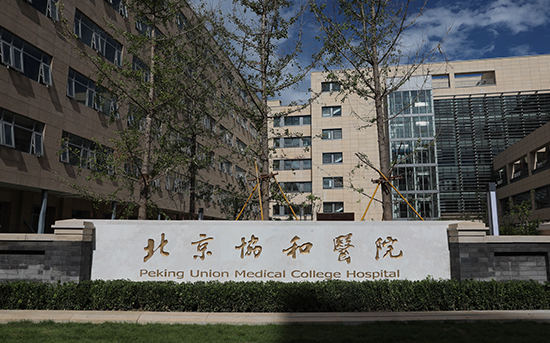
1. A Century of Excellence: The "Rockefeller" Legacy
PUMCH was established in 1921 by the Rockefeller Foundation with a singular, ambitious goal: to create the "best medical center in Asia." Modeled after Johns Hopkins University, it introduced modern Western medical education and rigorous clinical standards to China.
The hospital’s campus in the heart of Beijing is a visual metaphor for this East-meets-West history—featuring traditional Chinese "palace-style" architecture that houses some of the world's most advanced medical equipment.
2. The Supreme Diagnostic Center
In the Chinese healthcare system, PUMCH is where the "buck stops." It is officially designated as the National Center for Difficult and Severe Diseases.
- Case Complexity: When local or provincial hospitals across China encounter a condition they cannot diagnose or treat, the patient is almost invariably referred to PUMCH.
- Multidisciplinary Approach: PUMCH is famous for its MDT (Multi-Disciplinary Team) consultations, where top experts from neurology, cardiology, oncology, and other departments collaborate in a single room to solve "medical mysteries."
3. The "Three Treasures" of PUMCH
The hospital’s reputation is built on what staff and patients call the "Three Treasures":
- The Professors: PUMCH has been home to the pioneers of modern Chinese medicine, such as Dr. Lin Qiaozhi (the "Mother of Chinese Gynecology"). Today, it boasts the highest concentration of academicians and top-tier specialists in the country.
- The Case Files: The hospital maintains an incredible archive of medical records dating back to 1921. These files are not just paper; they are a continuous 100-year longitudinal study of diseases in the Chinese population, serving as an invaluable research resource.
- The Library: One of the most comprehensive medical libraries in Asia, symbolizing the institution's commitment to "ever-improving" academic rigor.
4. Global Standings and Research Power
PUMCH is not just a domestic leader; it is a global heavyweight in medical research and education.
- Rankings: It has consistently ranked No. 1 on the China's Best Hospitals list for over a decade.
- Specialties: Its departments of Endocrinology, Rheumatology, and Gynecology & Obstetrics are globally recognized for their clinical outcomes and breakthrough research.
- Innovation: PUMCH leads the way in rare disease research in China, hosting the national registry for rare diseases and pioneering AI-driven diagnostic tools.
5. International Services
For international visitors or expats, PUMCH offers an International Medical Department (IMD). This department provides English-speaking staff, streamlined appointment processes, and world-class care that bridges the gap between the Chinese public healthcare system and international expectations.
Summary Table: PUMCH at a Glance
| Feature | Details |
|---|---|
| Founded | 1921 (by the Rockefeller Foundation) |
| National Rank | #1 (Consistently for 10+ years) |
| Primary Mission | Diagnosis of complex, rare, and severe diseases |
| Core Values | Rigor, Precision, Diligence, and Devotion |
| Key Stats | 2,000+ beds, 4,000+ staff, 50+ clinical departments |